Arcade Games vs. Slots: Which Reigns Supreme for You?
From the dazzling lights of casino floors to the nostalgic buzz of local arcades, slots and arcade games stand as titans of the entertainment world. Their flashing screens and promise of excitement draw in millions, offering a quick escape and a chance at fortune or glory. But beneath the surface of flashing lights, these two forms of gaming offer vastly different experiences.
While both slots and arcade games deliver thrills, they cater to distinct preferences and play styles. One relies heavily on chance, the other on skill and strategy. One can potentially lead to substantial payouts, the other offers the immediate gratification of conquering a challenge and achieving a high score. This article plunges into the heart of slots and arcade games, dissecting their core mechanics, exploring their unique appeals, and ultimately, helping you decide which realm of gaming reigns supreme for your personal taste.
Defining Slots: A Game of Chance
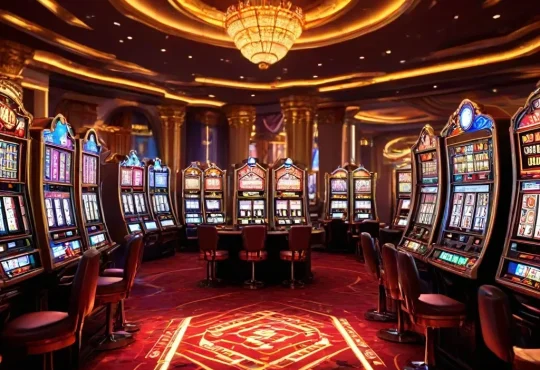
Slots are a staple in casinos around the globe, captivating players with their flashing lights and the promise of instant riches. But beneath the dazzling exterior lies a complex system governed by chance. At the heart of every slot machine is a Random Number Generator, or RNG. This is a sophisticated computer program that constantly generates random numbers, ensuring that each spin is entirely independent and unpredictable. Think of it as a digital dice roll, where the outcome is always a surprise. This system ensures fairness, as neither the casino nor the player can influence the result of a spin.
The payout percentage, also known as the return to player (RTP), is another crucial aspect of slot machines. It represents the percentage of wagered money that a slot machine is programmed to pay back to players over time. For instance, a slot with a 95% RTP will theoretically return $95 for every $100 wagered. However, it’s important to remember that this is a long-term average and individual results can vary significantly. Volatility also plays a role; high volatility slots offer larger but less frequent payouts, while low volatility slots provide smaller, more consistent wins. Aside from that, slots usually have paylines, symbols and bonus features which increase the adrenaline.
Understanding Paylines and Symbols
Paylines are the lines on which winning symbol combinations must land to trigger a payout. They can run horizontally, vertically, diagonally, or even in zig-zag patterns across the reels. The more paylines a slot machine has, the greater the chances of hitting a winning combination. Symbols also play a critical role. Standard symbols usually depict fruits, numbers, or letters, while special symbols like wilds and scatters can significantly boost your winnings. Wild symbols act as substitutes for other symbols to complete winning combinations, while scatter symbols can trigger bonus rounds or free spins, regardless of their position on the paylines.
RTP (Return to Player) Explained
RTP, or Return to Player, is a term you’ll often encounter when exploring the world of online slots. It represents the percentage of all wagered money that a slot machine is expected to pay back to players over a long period. The remaining portion is known as the house edge which represents the casino earning. For example, if a slot has an RTP of 96%, it theoretically pays back $96 for every $100 wagered. Knowing the RTP of a slot game can allow you to make informed decisions and adjust your gameplay strategy.
Defining Arcade Games: Skill and Engagement
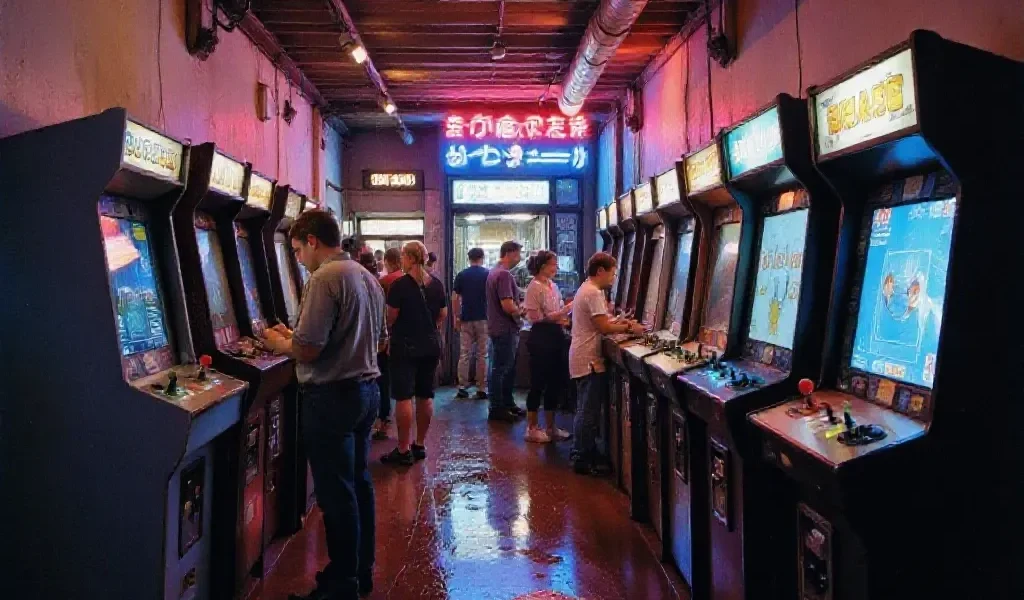
Arcade games stand out because they demand active participation. Success hinges on skill, not luck. Core gameplay emphasizes hand-eye coordination, reaction time, and strategic thinking. Think fast-paced decisions and precise movements. Players navigate challenges that require both mental acuity and physical dexterity.
Consider classics like Pac-Man, demanding spatial awareness and quick reflexes to evade ghosts. Donkey Kong needs precise jumps and timing to conquer obstacles. Street Fighter requires strategic thinking combined with flawless execution of complex moves. All these games exemplify how players constantly hone their skills through practice.
Arcade games provide immediate feedback. Every action directly influences the outcome, encouraging players to refine their techniques and develop deeper strategies. This constant loop of action, feedback, and adjustment makes arcade games engaging and rewarding.
Variety of Arcade Game Genres
Arcade games span diverse genres, each demanding a unique skill set. Fighting games, require memorization of combos and frame data, and lightning-fast reflexes. Puzzle games, sharpen logical thinking and spatial reasoning. Platformers, test precision and timing. Shooters, demand accuracy and strategic positioning. Racing games, need impeccable control and course management.
The Sensation of Control and Mastery
Arcade games provide a unique sense of control. Unlike games governed by chance, arcade games reward skillful play. Each achieved level and high score validates the player’s abilities. This fosters a feeling of mastery. Conquering a difficult game brings a deep sense of accomplishment, which is a testament to improved skill and dedication.
Key Differences: Chance vs. Skill, Payouts, and Gameplay
Slots and arcade games, while both offering entertainment, diverge significantly in their core mechanics and player experience. The most notable differences lie in the elements of chance versus skill, the structure of payouts, and the overall gameplay dynamic. Slots primarily rely on luck, offering a passive experience, while arcade games emphasize active participation and strategic input.
| Feature | Slots | Arcade Games |
|---|---|---|
| Dominant Element | Chance | Skill |
| Payout Structure | Predetermined, fixed (RNG based) | Variable, based on performance |
| Gameplay | Passive, solitary | Active, can be competitive |
| Social Interaction | Minimal | Potential for high interaction |
| Learning Curve | Simple | Complex |
Payout Structure and Odds
Slot machine payouts are baked into the system, influenced by random number generators (RNGs). The odds of winning are predetermined, and players have no influence over the outcome beyond initiating the spin. In contrast, arcade game payouts, often in the form of tickets or extended playtime, are directly linked to a player’s skill. High scores translate to better rewards, establishing a system where ability dictates success.
Skill, Strategy, and Learning Curves
Slots require minimal player skill; understanding the paytable and managing your bankroll are the primary considerations. Arcade games, however, demand a wide range of skills: hand-eye coordination, quick reflexes, strategic thinking, and pattern recognition. Mastering an arcade game involves a learning curve, often requiring practice and the development of specific strategies to achieve high scores and unlock the ultimate win.
The Psychology of Playing: Why People Choose One Over the Other
Delving into the human psyche reveals fascinating insights into why individuals gravitate towards certain forms of entertainment. When it comes to slots and arcade games, the choice isn’t merely about accessibility or aesthetics; it’s deeply rooted in psychological motivations and personality traits. Some are allured by the siren song of chance, the adrenaline rush of potentially hitting the jackpot on a slot machine. This pursuit is often linked to risk tolerance and a preference for immediate, albeit uncertain, rewards. Others find satisfaction in the structured challenges of arcade games, where skill, strategy, and a sense of mastery dictate success. The draw here lies in the feeling of control and accomplishment, appealing to those who favor a more predictable path to gratification, valuing persistence and improvement over pure luck.
Risk and Reward Preferences
The allure of slot machines often hinges on the concept of variable ratio reinforcement. Players are psychologically conditioned to anticipate unpredictable rewards, fueling a sense of excitement with each spin. High-risk tolerance individuals are naturally more drawn to this type of reward system. Arcade games, in contrast, offer a more stable reward structure, where success is directly proportional to skill and effort. These games appeal to individuals who appreciate a tangible link between their actions and the resulting rewards.
Flow state in Arcade Games
Arcade games have unique ability to fully engage players due to the potential for inducing a “flow state”. As described by psychologist Mihály Csíkszentmihályi, flow is the mental state of being completely absorbed in an activity, characterized by a sense of focused energy, full involvement, and enjoyment in the process. The immersive nature of arcade games with challenging goals and immediate feedback loops provides an ideal environment for achieving this state, captivating players who seek a deeply engaging and rewarding experience.

The Blurring Lines: Modern Trends and Hybrids
Technology is rapidly dissolving the distinctions between traditional slot machines and classic arcade games, giving rise to innovative hybrid games that merge the thrill of chance with the engagement of skill. These aren’t your grandma’s slots; the gaming world is evolving, driven by technological advancements and changing player preferences. The surging popularity of esports and competitive gaming directly influences the demand for arcade-style engagement, pushing developers to create experiences that are both captivating and challenging.
Virtual Reality (VR) and Augmented Reality (AR) stand at the forefront of this transformation, promising to further enhance the gaming landscape. VR is set to provide completely immersive environments, placing players directly inside the game world. Augmented Reality (AR) layers digital elements onto the real world; creating hybrid experiences that were once in the realm of science fiction. These technologies open doors for more intricate and interactive hybrid games, blurring the line between physical and digital recreation.
Skill-Based Bonus Rounds in Slots
Skill-based bonus rounds are injecting new life into slot machines by adding a layer of player control. Instead of passively watching the reels spin, players actively participate in bonus rounds that require skill and strategy. These interactive elements transform the gaming experience, as skill and chance combine to determine the player’s fortune. It’s more than just luck, it’s about calculated moves and quick reactions.
Arcade Mechanics in Mobile Games
Mobile game developers are tapping into a powerful sense of nostalgia by incorporating classic arcade game mechanics into their designs. Think retro graphics, chiptune soundtracks, and simple yet addictive gameplay loops. These arcade-inspired mobile games offer a welcome break from the hyper-realistic graphics and complex narratives of modern titles. It’s a trip down memory lane, playable anywhere, anytime. These features introduce arcade mechanics to a new generation of gamers, while also resonating with those who grew up in the arcade’s golden age.
The Future of Gaming: What to Expect
Personalized Gaming Experiences
Imagine a world where every game you play is tailored specifically to you. That future is closer than you think, thanks to AI. Artificial intelligence is poised to revolutionize gaming, enabling hyper-personalization. Games will dynamically adjust difficulty based on your skill level, ensuring a constantly engaging challenge. AI could also craft storylines and quests that resonate with your individual preferences, creating unique and unforgettable gaming experiences. Forget generic characters and predictable plots; the future promises a gaming landscape as diverse and individual as the players themselves.
Blockchain Technology in Gaming and Gambling
Blockchain is not just for cryptocurrencies; it’s also transforming the gaming and gambling industry. Imagine owning unique in-game assets as NFTs, verifiable and tradable. Blockchain could also ensure fairness and transparency in online gambling, with provably fair algorithms. Crypto casinos are already gaining traction, and this is just the beginning. Think about earning crypto rewards for completing in-game achievements or participating in tournaments. Blockchain is set to create entirely new economic models within games.
Conclusion
In conclusion, while both slots and arcade games fall under the umbrella of gaming, they offer distinctly different experiences. Slots provide a solitary, chance-based pursuit with the lure of substantial payouts, accessible with minimal skill. Arcade games, conversely, emphasize skill, competition, and social interaction, rewarding players for their dexterity and strategic thinking.
The choice between slots and arcade games ultimately boils down to personal preference. Do one prefer the suspense and potential riches of a spinning reel, or the challenge and camaraderie found in a bustling arcade? Both offer legitimate forms of entertainment, each with its own unique appeal. It is recommended to explore both worlds. Dive into the flashing lights and calculated risks of slots, then test your reflexes and strategy at the arcade. The best game is the one that brings the most enjoyment.